
Readers Want the Dark Again — and the Numbers Prove It
Updated: Sep 16
For most of my life, horror has been the genre everyone loved, and nobody admitted to loving. The shelf in the back. The paperback you hid inside the dust jacket of something respectable. We pulp people have always known the truth, that the strange and the frightening are not a lesser literature but the oldest one, and for a while it felt like we were the only ones keeping score. We are not the only ones anymore. The accountants have noticed.
If you write dark fiction and you have been waiting for permission to take it seriously as a career, here it is, in the most unsentimental form there is: sales data. The numbers coming out of the industry right now are not subtle, and they point in exactly one direction.
The genre is not "recovering." It's eating.
Start with the headline figure. According to Draft2Digital's indie sales reporting, horror is posting double-digit revenue growth, and it is not the only dark corner of the store doing well. Crime and crime-adjacent fiction are surging right alongside it, and the subgenres climbing fastest are those that blend fear with the supernatural. In particular, cozy paranormal mysteries and supernatural thrillers are growing dramatically rather than incrementally.
That theatrical resurgence you have watched all year is the same wave from a different angle. Horror has quietly become one of the few genres studios can count on to put bodies in seats, financially and creatively, which is why every other trailer right now is a fresh nightmare instead of a fourth sequel. The screen and the page are running on the same current.
Booksellers see it too. The folks tracking what readers are actually reaching for describe 2026 as a banner year for crime and darkness; the fascination with the awful, real or imagined, simply does not quit. People want to be unsettled. They want the page to do something to them.
The part every writer should tattoo somewhere
Here is the detail buried in the data that matters most for anyone deciding what to write next. Readers are not just buying more dark fiction. They are migrating within it, toward the escapist, the supernatural, the strange, and away from stories grounded in domestic realism. The polished suburban thriller, the unreliable wife, the twist you saw coming three chapters out: that well is drying up. The sharp decline of the domestic thriller is one of the clearest signals in the whole picture.
Translate that out of analyst-speak, and it says something a pulp editor could have told you in 1935. When the world gets heavy, readers do not want a mirror. They want a door. They want to be taken somewhere that operates on different rules, somewhere with a monster in it, literal or otherwise, because that is where catharsis actually lives. The supernatural is not a gimmick layered on top of "serious" fiction. For a huge and growing slice of the audience, it is serious fiction.
This is the entire thesis of the pulp tradition, vindicated by a spreadsheet. The strange tale was never escapism in the dismissive sense. It was the most efficient delivery system ever built for dread, awe, and the things we cannot say plainly. The readers have always known. Now the market is shouting it.
What this means if you write short
A boom in a genre is one thing. A boom that rewards short dark fiction specifically is the thing that should make you sit up, because that is where most of us actually start, and where a lot of us do our best, sharpest work.
Short horror has a structural advantage in a moment like this. A novel is a bet that takes a year to settle. A short story is a bet you can place this week. When the reader's appetite is shifting fast, and the demand is for the weird and the supernatural rather than the safely realistic, the writer who works short can chase the wave instead of guessing where it will be when their manuscript finally lands. You can write the cosmic, the folk-haunted, the quietly wrong, and you can get it in front of readers before the trend report is even outdated.
That is the whole reason short-fiction venues matter more right now than they have in years. Magazines are not the consolation prize you settle for while you wait to be a "real" novelist. They are the proving ground, the place a voice gets sharpened, an audience gets built, and a byline starts to mean something. In a market this hungry, the venue is the multiplier.
Which brings me to the obvious thing
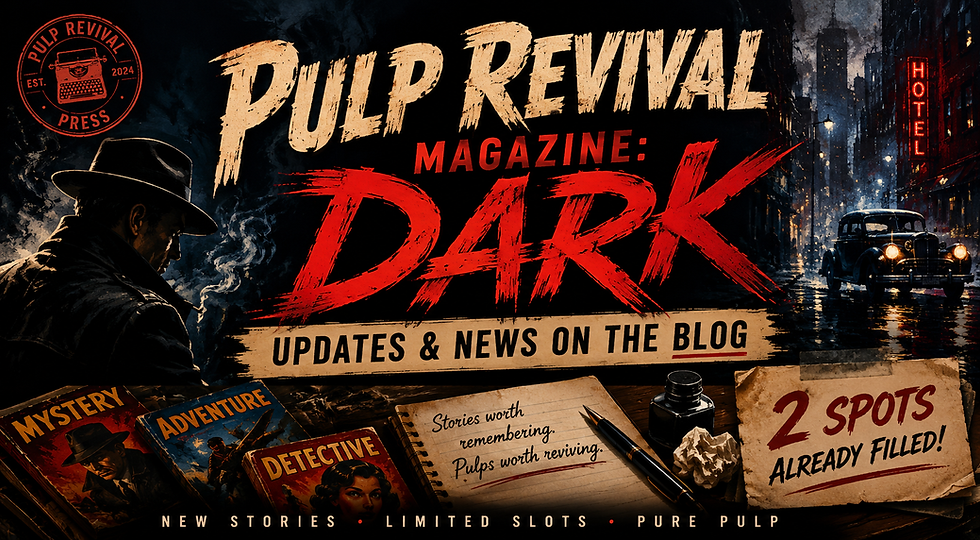
We did not start Dread because we wanted another magazine in the world. We started it because the kind of fiction the data is screaming for, supernatural, strange, slow-burning, unafraid of the dark, is exactly the kind of fiction we believe in. We wanted a place to put it that took it seriously as craft and as art.
The numbers say the readers are there. We are building the room they walk into.
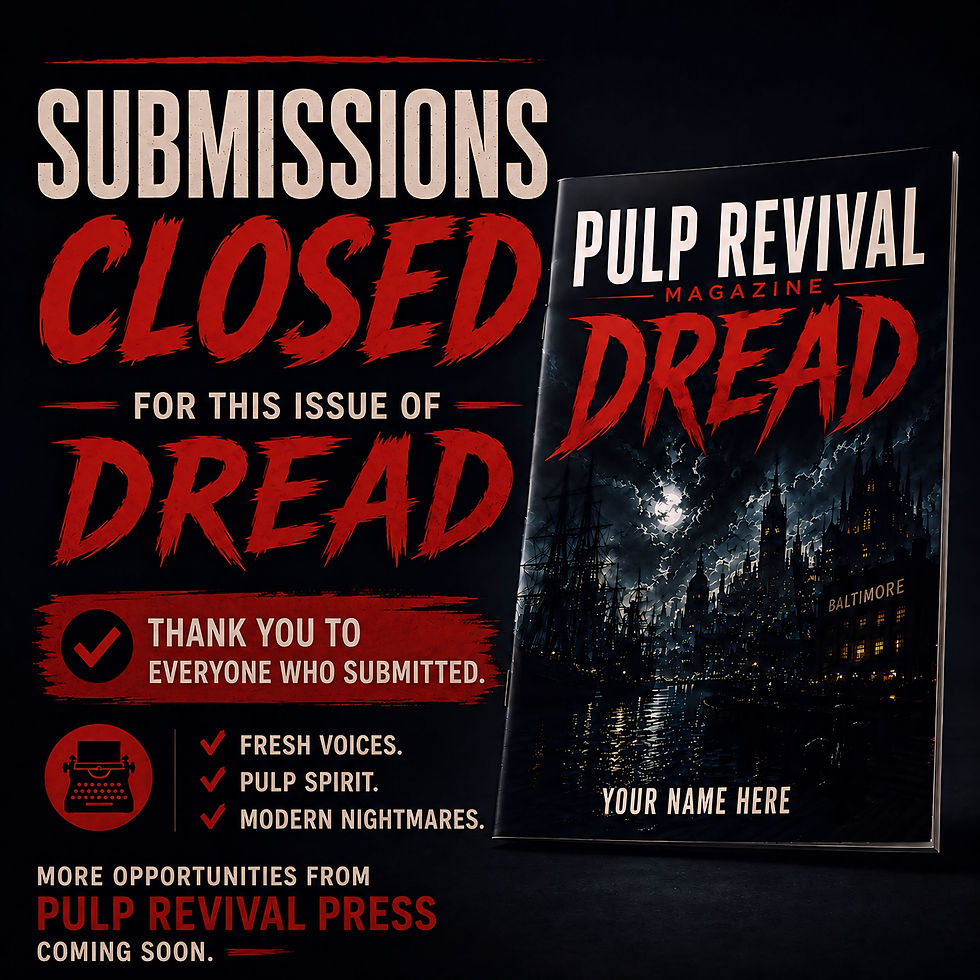
So here is the part where I stop talking about the market and ask you to be part of it. Dread is open to submissions of horror, dark fantasy, and weird fiction. We want the story that operates by different rules, the one that takes the reader through the door rather than holding up a mirror. If you have been sitting on something strange because you weren't sure the world wanted it, the world has filed its quarterly report, and the answer is yes.
Guidelines and submission details are on the site. Send us the dark thing. The audience is waiting, and so are we.
Pulp lives here.
#Horror #HorrorBooks #HorrorFiction #WeirdFiction #DarkFantasy #CosmicHorror #FolkHorror #Supernatural #SupernaturalThriller #GhostStories #Haunted #Dread #SlowBurnHorror #AtmosphericHorror #GothicHorror #PsychologicalHorror #IndieAuthor #AmWriting #WritingCommunity #ShortStories #ShortFiction #LiteraryMagazine #WritingOpportunity #CallForSubmissions #SubmissionCall #GetPublished #PulpFiction #PulpRevival #PulpRevivalPress #PulpRevivalMagazine #HorrorWriters #HorrorCommunity #WeirdLit #SpeculativeFiction #DarkReaders #Bookstagram #BookTok #ReadersOfInstagram #SupportIndieAuthors #ReadMoreHorror
Comments